

Dose of Paranoia - 2026-05-09
It gets worse before it gets worse....
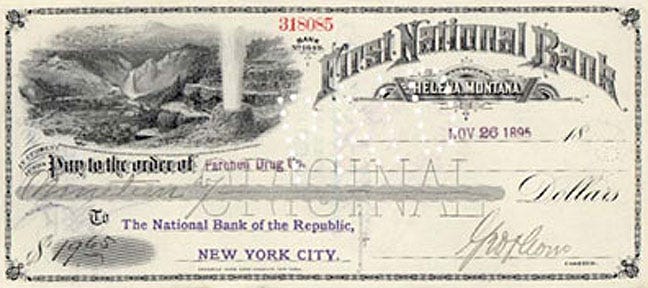
Mailing checks is really dangerous – criminal gangs have caught on to the ease of mail theft and schemes like “check washing” where they change the payee and amount, deposit the checks and make off with their ill-gotten gains. Just recently, police in my hometown of Weehawken, NJ broke up a mail theft ring that was doing just this. If you are still mailing checks to pay bills, now would be a good time to investigate other options. So here are some to consider…

Using the electronic bill payment service offered by your bank is a potentially good option. In many cases, the payments are made electronically and at most banks, you can set up security measures (multi factor authentication, payment PIN codes), limits, and alerts to protect your funds. But be careful – in some cases (especially with smaller payees) the bank will just be printing out and mailing a check on your behalf, thus exposing you to the same risks as your writing a check and mailing it. Most banks will tell you if this is the case when you are setting up the payee. If that’s the case, consider one of the following options instead.
Another option is to use ACH payments, also known as eChecks. In this scenario, you provide the payee with the routing and account numbers from your check and they can then yoink the necessary funds from your bank account electronically. This has some risk – if the payee is hacked and your account/routing numbers are stolen, the thieves could potentially pull funds from your account. But there are laws to protect against this type of theft – consumer losses are capped at $50 if a fraudulent transaction is reported within 2 business days and at $500 if the report is made within 60 days of the statement. And if the fraud was committed without use of an “access device” like a debit card or online bank credentials, you (as a consumer) are shielded from any losses. These protections do not apply to business accounts, however.
If a payee allows you to pay a bill with a credit card, this might be the best option from a security point of view. In a worst-case scenario, if the payee gets hacked and your credit card number is stolen, it is the credit card company who will eat any losses. They will issue you a new card and number and you can just go on with your life. Yes, you’ll have to update any recurring payments you are making from that card with the new number, but you won’t lose any money. And depending on the credit card, you might get points or cash back on (non fraudulent) payments. HOWEVER, these might be offset by “convenience fees” that the payee charges to recoup the transaction fees charged by Mastercard, Visa, Discover or Amex – you need to look out for that.
If you need to send payments to individuals you know, using the Zelle payment service offered by most US banks is a good way to go. You should be wary of sending Zelle payments to people you do not know, as Zelle payments happen in seconds and are not reversible, making them a favorite tool of scammers and fraudsters.

The US’ dependence on paper checks is one of those things that makes people in other countries scratch their heads – sort of like our health care system, or the fact that we elected a senile criminal rapist President. Most other countries long ago figured out that paper checks are a relic of the past and a gift to criminals. Hopefully, one day we will as well.
Fun Stuff
Well this would have been one way to solve the Manhattan real estate scarcity crisis…
If you are using AI to help in your personal or work life, have you ever stopped to consider what your clanker buddy’s political “opinions” are and whether they align with yours? This web site will tell you…
Thinking about your next vacation?
Yay! Glad you are back. Important stuff!
Welcome back, you were missed.